Let’s start with PEDs, Performance Enhancing Drugs. Now some will tell you this began with the advent of the Iron Curtain and the Olympic medal race. With the East Germans taking the fall as the poster child of sports doping success though they were far from alone. See this, one of many pieces on the topic. Doped East German athletes to receive compensation – PMC
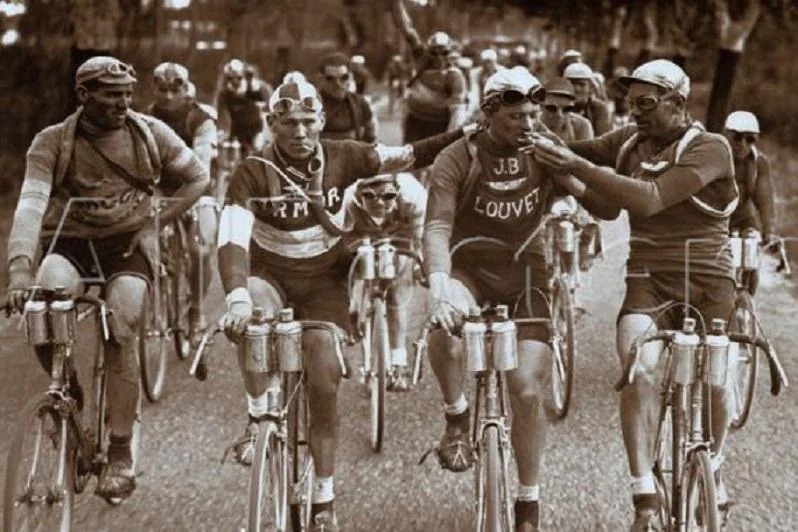
On a historical if not hysterical note, back in the 1920s and ‘30s competitive cyclists would smoke a cigarette just before starting a long, arduous climb. The belief at that time was smoking helped open up their lungs so they could breathe better.
Throughout time competitors in all sports have sought an advantage. Most through better training, coaching, gear, nutrition, hydration, even medicine short of PEDs but including natural / holistic supplements. Unfortunately sometimes the latter were little more than PEDs in alternative forms.
So the various sports bodies got together to put the hammer down on those cheating via drugs and the way more clever blood doping / blood boosting along with other nefarious medical practices. To a large degree that ‘helped’ though to some degree the jury is still out. Many observers of sport wonder if the test / detection systems can keep pace with modern science.
I would like to counter that a bit with the notion of Big Data. While the mad scientists were developing all sorts of PEDs and blood boosting techniques they were also starting to seriously monitor all sorts of athlete health, diet, blood / urine, breath, heart rate, HRV (heart rate variability), VO2 Max (now in near realtime), LT (lactate threshold in real time), power, peak power, sleep (all sorts of parameters, and a ton of other data. And it wasn’t just the mad scientists pushing their PED agenda. Around the world the fields of sports medicine and healthy aging began adopting the newly emerging technologies that brought easy, relatively inexpensive, reliable, and very accurate data to the masses.
From the FitBit to Apple and proper sports watches like the Garmin series tens if not hundreds of millions of people of all sorts of shapes, sizes, fitness, and health have been providing reams of data. But it got even better.
The sports community, I’ll stick with cycling since it is a bicycle I plan to ride across America, with the introduction of near hospital grade heart rate monitors combined with precision power meters and body fat measuring scales all of a sudden had more data than they knew what to do with it.
Although it didn’t take long to sort out meaningful information, identity trends, markers, patterns, etc. Coaches and self-guided athletes now had incredible feedback loops available to fine tune their training. With proper planning combined with the now available data feedback a super star athlete can achieve peak performance at levels the PED infused community couldn’t dream of a mere 10 years ago.
Trust me, as a senior athlete I am able to ride longer and faster than I could when racing and competing 25 years ago. And I haven’t even begun to seriously train using the tools and coaching plans available.
Big Data, analytics, and technology can help us all regardless of our goals or age.
 RAAM2CC©
Leave a comment